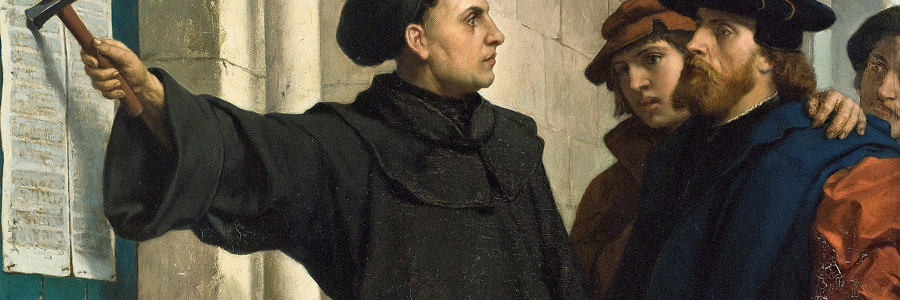
There was nothing remarkable about that day in October, 1517, when a Roman Catholic priest by the name of Martin Luther fastened his now famous ninety-five theses to the Castle Church door in Wittenburg, Germany. He certainly did not expect to ignite a religious revolution. As a loyal son of the established church, Luther merely wished to engage his university town in theological discussion about certain church doctrines that troubled him. His goal was to try to rein in some of the most grievous abuses of the Church by discussing them openly.
Little did he know that his theses would be copied, printed, and distributed across Europe within days. In the providence of God, Luther’s modest debate propositions ignited a fire that is still burning today. On this five-hundredth anniversary of the Protestant Reformation, it is fitting to remember how it all began, and more importantly, why.
There are some today who question the validity of this great schism with Rome. They believe that the Reformation, though probably warranted in its day, is no longer necessary. They assure us that the abuses of Luther’s day have been addressed, and it’s time to acknowledge the mistakes of the past and join hands as fellow members of Christ’s body.