SHARPER IRON
“As iron sharpens iron, so one person sharpens another.” (Proverbs 27:17)
  • About
    • About Sharper Iron
    • Doctrinal Statement
    • Contact
    • Search
  • Forum
    • Forum Home
    • Comment Guidelines
    • Search
  • Account
    • Log in
    • Register

Apocrypha

Why ‘Lost’ Gospels Go Viral—and the Real Ones Don’t: Reviewing ‘The Genuine Jesus and the Counterfeit Christs’ by Simon Gathercole

By Filings on Fri, 10/17/25
Body

“There’s nothing wrong with being intrigued by lost gospels…. But we always have to make sure we aren’t studying any gospel—including the canonical gospels—merely to satisfy or justify our preexisting preferences about the way we want Jesus to be. We don’t simply get to create the Jesus we like or the Jesus we prefer.” - TGC

Does a New Gospel Fragment Detail Jesus’ Childhood?

By Filings on Tue, 06/25/24
Body

“If the reports are accurate, then this 1,600-year-old fragment would be our oldest copy of the Infancy Gospel of Thomas—not to be confused with the so-called Gospel of Thomas. Neither text deserves to be called a Gospel” - AiG

The Book of Tobit (Part 1)

By TylerR on Thu, 07/25/19

Tobit is an apocryphal book that is included in various early Septuagint editions of the Greek Old Testament. It is canonical in the Eastern Orthodox, Roman Catholic, and Ethiopian Orthodox traditions. However, it is certain the earliest Christians, who used various editions of the Septuagint, were familiar with Tobit. It is set during the Assyrian exile, and written sometime between 400 and 175 B.C. The book is fascinating because it presents a beautiful portrait of a faithful Jewish man living in the second-temple period, after the Book of Malachi. This excerpt is from the Revised Standard Version.

Theology Thursday - The Problem of Evil from 2 Esdras

By TylerR on Thu, 02/15/18

The book of 2 Esdras is usually grouped with the Old Testament Apocrypha, even though that really isn’t accurate. It’s actually a composite book containing three documents. The largest is a Jewish apocalypse from the late first-century (also known as 4 Esdras), likely written just after the destruction of the temple in the aftermath of the Jewish Wars. It’s book-ended by two, shorter Christians works: the first from the second century and the other from the third century.

Theology Thursday ... On Friday: The Maccabean Revolt

By TylerR on Fri, 01/12/18

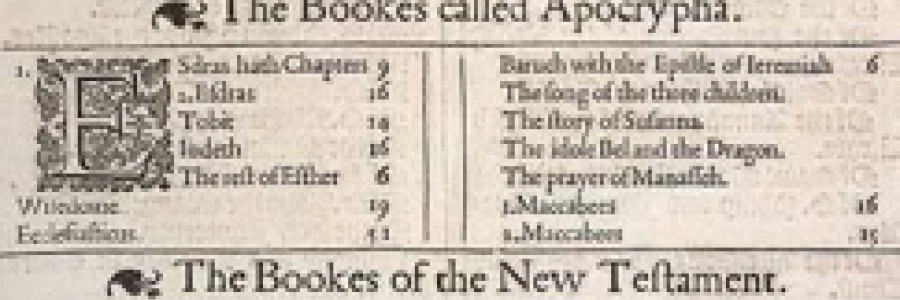
Many Christians don’t send time reading the so-called Old Testament “apocryphal books.” These are a series of works (the number varies, depending on the source) which appeared in versions of the Greek Old Testament in the 400 years or so before Christ’s advent. Protestants have not traditionally considered these as canonical, but they’re an invaluable historical bridge to help us better understand the intertestamental period.

Image
Image of file drawer

Footer

  • About
  • Contact
  • Search
  • Forum

Since 2005

Image
2005 SI Logo Image