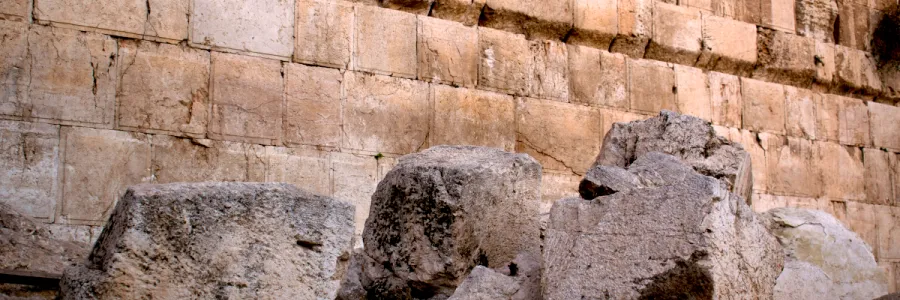
Tisha B’Av refers to the ninth day of the Hebrew month of Av. The very name portends fasting and grief. It is the date on which Nebuchadnezzar of Babylon destroyed Solomon’s Temple in 586 B.C.
Yom HaShoah grieves murder of 6 million Jews, honors survivors, rescuers
Body
“ ‘It’s too heartbreaking, I think. It’s very hard,’ Worshill told Baptist Press as Israel marks Yom HaShoah beginning this evening (April 17). ‘It’s a whole side of the family that basically doesn’t exist anymore because they were killed in the camps, or killed in the resistance.’” - BPNews
Jesus the Jew – A Short Diatribe
Over the many years I have been reading and writing about the Christian Faith, I have become just a little irritated by those well meaning people who try to tell me that in order to really know about Jesus, or ‘Yeshua’ as they like to call Him, it is necessary to get a Jewish perspective on the Gospels. (Actually, “Yeshua” is Hebrew, and Hebrew was rarely spoken in Israel in His day. According to the esteemed Jewish historian David Flusser, “Yeshu” would have in all probability been His name in Galilee (The Sage From Galilee, 6)).
Auschwitz survivors pay homage as world remembers Holocaust
Body
“The world marked International Holocaust Remembrance Day on Sunday amid a revival of hate-inspired violence and signs that younger generations know less and less about the genocide of Jews, Roma and others by Nazi Germany during World War II.” - RNS
CNN Survey Puts Spotlight on Attitudes Toward Jews in Europe
Body
“More than one-fifth of the participants believe Jews have immense amounts of influence in global politics and finance. On the other hand, more than one-third of the individuals stated they didn’t have much information regarding the death of six million Jews during the 1930s to the 1940s under the Nazi regime.” - WR News
“[A] new, groundbreaking documentary about the Holocaust can barely say the word ‘ Jew.’”
Body
“HBO’s documentary ‘Night Will Fall’ spoke of ‘prisoners,’ “inmates,’ ‘victims.’ But who were they?
It takes an hour for ‘Night Will Fall’ to get around to uttering the word ‘Jew’ — and when it comes, it is from the lips of a Jewish survivor.” Auschwitz was about the Jews
The Preservation of the Jewish People: Diaspora
 (Read Part 1)
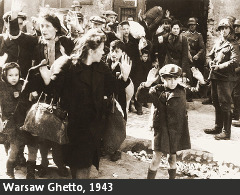
Although many Bible students are familiar with the general developments of Jewish history until the destruction of Jerusalem in AD 70, few have any familiarity with their history between that fateful date and the twenty-first century. It is not a pretty story. Although a small remnant of Jews always continued to live in the land of their forefathers, the vast majority sojourned in the diaspora (literally the “scattering”), a technical term for those lands outside of the land of Israel. They were guests in foreign countries—“aliens” and “exiles” would be a more appropriate term for their plight. Their hosts, moreover, were far from anything deemed “hospitable.”
No matter where they wandered in the medieval world, the Jewish people never had citizenship open to them in any country. Not only were they often hated as a group, they were also often caught between warring factions and suffered the consequences. When the European Crusaders launched their expeditions in the eleventh through the thirteenth centuries to free the Holy Land from the Muslims, they slaughtered dozens of Jewish communities along the way. When the Black Death spread through Europe in 1348-1350, many blamed the Jews for poisoning wells and burned thousands, especially in Germany. Even the Pope, not always a friend to the Jews, opposed such baseless accusations, but the mob could not be dissuaded from their blind hatred.