
It seems those who hate Israel have taken particular joy in using their holidays as opportunities to mount assaults against them—on days when they might be least suspecting and least prepared.
Why does Hanukkah start on Christmas this year?
Body
“Typically, the miracle of Hanukkah is celebrated in early to mid-December, though the date varies each year depending on how the Hebrew calendar aligns with the solar calendar.” - Religion Unplugged
Day of Atonement: How Yom Kippur Points to Salvation in Christ
Body
“Yom Kippur, commonly translated as the Day of Atonement….Of all the days marked out in Leviticus 23, this was the high point. On the Day of Atonement, the entire sacrificial system was rebooted.” - TGC
Yom Kippur: The Day of Atonement
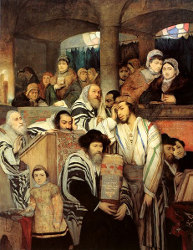
This year, Jewish people celebrated their most solemn holiday of the year, Yom Kippur—known to us as The Day of Atonement—from sunset September 25 through the 26th. In modern Judaism, this is a time to grieve over one’s sins, repent, fast, and find God’s forgiveness.
In biblical times, this holy day involved the covering of sin by the payment of a penalty. The NIV of Leviticus 5:5-6a captures the idea of atonement: “When anyone is guilty in any of these ways, he must confess in what way he has sinned and, as a penalty for the sin he has committed, he must bring to the LORD a female lamb or goat” (emphasis added).
No animal sacrifices could attain salvation, but merely made the individual ritually and socially clean. Hebrews 10:4 is blunt: “[I]t is impossible for the blood of bulls and goats to take away sins.” From a New Covenant perspective, we can see that Yom Kippur also foreshadows a massive and complete spiritual cleansing.
Yom Kippur Under the Old Covenant (Leviticus 23:26-32, 16:5-34)
The Old Covenant provided sacrifice to cover unintentional sin, but not defiant sin. Numbers 15:30 (ESV) reads, “But the person who does anything with a high hand, whether he is native or a sojourner, reviles the LORD, and that person shall be cut off from among his people.”
God may graciously forgive such defiant sins, but not on the basis of animal sacrifice. God justly forgives on the basis of the sacrifice of Christ (Rom. 3:25-26). Before Jesus, the individual sinner could only offer God repentance and cast himself upon God’s mercy. God’s character and faithful love would be the source of the repentant sinner’s hope. It is that character and faithful love which would one day send the promised Messiah, Yeshua, to settle accounts.