SHARPER IRON
“As iron sharpens iron, so one person sharpens another.” (Proverbs 27:17)
  • About
    • About Sharper Iron
    • Doctrinal Statement
    • Contact
    • Search
  • Forum
    • Forum Home
    • Comment Guidelines
    • Search
  • Account
    • Log in
    • Register

Women in Scripture

A Theology of Woman from Titus 2: Grace-Driven Living and Training

By Filings on Fri, 03/28/25
Body

“adapted from Sunday School lessons I wrote several years ago for women and teen girls. The goal was to form a ‘theology of woman’ by looking chronologically at all of the major portions of Scripture regarding women and womanhood. What does the Bible say are the roles, duties, challenges, and opportunities that we have as women?” - Holly Huffstutler

Women in Luke’s Gospel: Christianity’s Elevation & Concern for Women

By Filings on Tue, 08/13/24
Body

“Christianity, at least in its earliest centuries, had a reputation for being pro-woman, to the point of being disparaged as an effeminate, even emasculating, religious association.” - Word by Word

The Phoebe Problem

By Filings on Wed, 02/16/22
Body

“It’s not enough to understand and interpret the way we’ve always read certain passages of Scripture. We need to pay attention to what God is saying—through Phoebe and through the rest of the Scriptures.” - Conciliar Post

Biblical Roles of Men & Women in the Church, Part 2

By Guest on Thu, 12/02/21

By Todd Kinde. Read Part 1.

Biblical Roles of Men & Women in the Church, Part 1

By Guest on Fri, 11/19/21

Todd Kinde

A biblical theology of manhood and womanhood within the church can be approached in a couple of ways. One way is to determine from Scripture what a man or a woman can or cannot do in the life and ministry of the local church. A second way is to discern what man and woman are to be within the local church. Who one is determines what one does, while what one does defines who one is. With this premise in mind, this article will begin by gleaning the Scripture for truths regarding our being, then truths regarding our doing.

Book Review: Vindicating the Vixens - Revisiting Sexualized, Vilified, and Marginalized Women of the Bible

By TylerR on Sat, 01/13/18
Body

Phillip Long: What might be surprising to some readers is how often the portrayal of these women in popular preaching and teaching is skewed or just plain wrong.

Minnesota church women count words in Bible spoken by women

By Filings on Mon, 02/02/15
Body

“We were stunned nobody had done this before”

The Synagogue and the Church: A Study of Their Common Backgrounds and Practices (Part 10)

By Douglas K. Kutilek on Wed, 12/03/14

Reprinted with permission from As I See It, which is available free by writing to the editor at [email protected]. Read the series so far.

Chapter Six (continued): The Place of Women

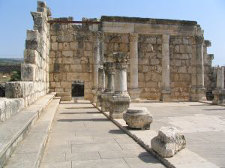
Women in the Synagogue

Nothing is said about women in listing the requirement of ten men as the bare minimum for the establishment of a synagogue. The express instructions about the process of Gentile conversion to Judaism focus on male proselytes, but the mention of female proselytes in the Mishnah de facto establishes that female Gentiles could also convert to Judaism. And though women could convert to Judaism, this does not necessarily indicate that women were allowed to become a part of the synagogue. Kaufman Kohler, renowned Jewish scholar and President of Hebrew Union College, asserted matter-of-factly,

Women could not be members of the synagogue, though they seem to have performed synagogal functions of their own, and so prominent women were elected as mothers of the synagogue (‘Mater Synagogue’)…. They attended the service…, but could take no part in the common service.1

Teach Like a Girl

By handerson on Thu, 01/09/14

Over the holidays, I took a bit of time away from writing. In a pastor’s family, the weeks between Thanksgiving and Christmas are one full-out sprint. There’s all the normal busyness as well as a full calendar of Advent-related activities—pageants, cookie exchanges, evening fellowships, and caroling. Once we hit Christmas Day, though, things tend to settle down, and I have time to visit with family and do extra reading.

One of the books I discovered over the holidays is a collection of vignettes about the women of the New Testament. I was prepping for this year’s women’s Bible study at church and like any good teacher (who is consistently running just shy of deadline), my first stop was the Amazon search engine. I typed in “Women of the New Testament” and one of the first entries was written by, of all people, Abraham Kuyper. Apparently in the midst of reforming turn-of-the-century Dutch society, establishing an entire branch of theology, and pastoring multiple congregations, Kuyper also had time to write on women of the Bible. (Abraham Kuyper: Statesman, Theologian, and Father of the Modern Women’s Bible Study?)

From Virgin Birth to Glorious Resurrection: The Son of God and Women

By John C. Whitcomb on Fri, 03/29/13

It is fascinating to see the part women had in the life of God’s Son during His third of a century on this planet. We all know of His arrival in the body of a young virgin and of the encouragement that Elizabeth and Anna gave to her at that time (cf. Luke 1:36-45, 2:36-38).

Then, for 30 years, Joseph and His mother had authority over Jesus (cf. Luke 2:51, Matt. 13:55). Mary suffered much shame in that notorious town of Nazareth for having a son by an unknown father (cf. John 1:46, 8:41, 8:48).

During the three years of His public ministry in Israel, the Savior cured women who were ailing (cf. Matt. 8:14-15, 9:20-22), raised one from the dead (cf. Matt. 9:18-26) and highly praised one for her sacrificial giving (cf. Luke. 21:1-4). He also reached out to “a woman of Samaria” (John 4:7ff.) and to “a woman of Canaan” (Matt. 15:22) in the land of Tyre and Sidon, concerning whom He said: “Great is your faith!” (Matt. 15:28).

Much if not most of the finances that our Lord and His apostles needed came from women who were thankful for his ministry in their own lives (cf. Luke 8:1-3). Also, Mary and Martha, sisters of Lazarus, provided rare hospitality and devotion to Him at Bethany, near Jerusalem (cf. Luke 10:38-42; John 11:1-45,12:1-8).

Finally, when the Lord Jesus was betrayed by Judas and abandoned by the other disciples (cf. Matt. 26:47-56), it was women who stayed by our Savior as He was crucified (cf. Matt. 27:55-56, Mark 15:40-41). The one named last, Salome, was a sister of Jesus’ mother and the mother of the apostles James and John. Then the apostle John returned to Jesus with these four women (cf. Jn. 19:25-27). Amazing! Of all His disciples, only one man showed such devotion to the end—and four women!

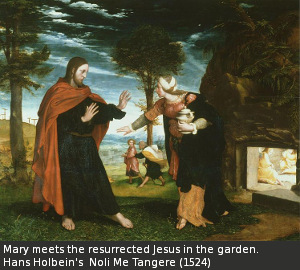
Even more amazing, if possible, is the record of what women did when Jesus died and rose again. When Joseph of Arimathea and Nicodemus buried the body of Jesus in a special tomb (cf. John 19:38-42), “the women who had come with Him from Galilee followed after, and they observed the tomb and how His body was laid” (Luke 23:55).

Image
Image of file drawer

Footer

  • About
  • Contact
  • Search
  • Forum

Since 2005

Image
2005 SI Logo Image