About the Author
Art Lindsley is senior fellow at the C. S. Lewis Institute in Springfield, Virginia. He is a conference and retreat speaker, and he has taught extensively at several theological seminaries.
Art Lindsley is senior fellow at the C. S. Lewis Institute in Springfield, Virginia. He is a conference and retreat speaker, and he has taught extensively at several theological seminaries.
Note: This article is reprinted with permission from As I See It, a monthly electronic magazine compiled and edited by Doug Kutilek. AISI is sent free to all who request it by writing to the editor at [email protected].
Josh McDowell and Bill Wilson, He Walked Among Us: Evidence for the Historical Jesus. Nashville: Thomas Nelson, 1993. 366 pp., paperback.
McGrath, Gavin, Walter Campbell Campbell-Jack and C. Stephen Evans, eds. New Dictionary of Christian Apologetics. Leicester, England: Inter-Varsity Press; Downers Grove, Ill.: InterVarsity Press, 2006. cloth, xx + 779 pages. $45.00
Within the Book of Acts is an anthology of apostolic preaching. Among those sermons is Paul’s address to the pagans and philosophers of Athens, what has been called his Areopagitica. [1] Here Paul proclaimed the gospel, not to 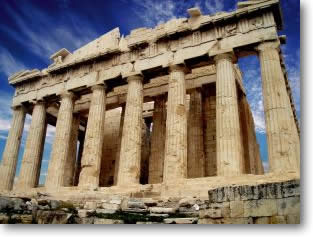 biblically informed, monotheistic Jews, but to pagans and philosophers of thoroughly unbiblical presuppositions. Here if anywhere we would expect to find insights on how to do apologetics today among secularists with their various isms or among modern pagans.
In Part One, I discussed Paul’s view of logic and its relation to the Word and doctrine. Paul viewed logical conclusions as fallible and submissive to the Word. Even so, Paul greatly respected logical thought. In Parts Two and Three, I want to look at a few ways Paul actually used logic.
Paul made great use of logic in his epistles. His logical thought is seen in his constant use of connecting words like “for,” “because,” “therefore,” etc.