Note: This article was originally posted December 16, 2005.
- About
- Forum
- Account
The goal of these articles (Part 1, Part 2) is to challenge misconceptions about the world and worldliness by taking a fresh look at our authority, the Scriptures themselves. I’ve argued that the biblical concept of worldliness encompasses much more than the matters of fashion, entertainment, and material possessions that we fundamentalists tend to focus on when we use the term.
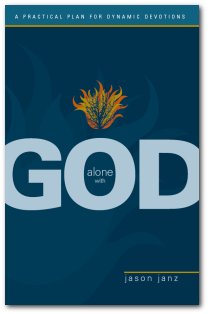 I dislike “legalese” in any context, but for this review a disclaimer is in order. I have served with Jason Jason for over five years on the staff of South Sheridan Baptist, now Red Rocks Baptist. When I first volunteered to review his book, Alone With God, I realized there could be some discomfort if I had to make negative comments.
The ground squirrel never knew what hit him. He had gone exploring in our Neon’s engine compartment and met his end in the serpentine belt when my wife started the car on her way to pick me up from work. She heard the belt go. My father-in-law very graciously picked me up from work, brought me by Advanced Auto for a new belt, and helped install it. This was a good thing because, when they passed out mechanical skills in heaven, I must have been in the library; my father-in-law, on the other hand, has done a lot of his own auto repair.
Note: This article was originally posted December 21, 2005. 
Traditions get picked on occasionally by Bible-believing people. I have done some of that picking myself and don’t regret it. Traditions are, after all, things handed down and honored by time, repetition, and the sharing of them by groups of people, and they are not necessarily rooted in any authoritative expression of the will of God.
Note: Dr. Sam Horn is host of The Word for Life radio program.
by Dr. Sam Horn
This is the question that the King James translators in their interpretation of the Hebrew text placed in the mouth of David in 1 Samuel 17:29. David is basically a kid, “a youth” (1 Sam. 17:33).
But when David saw Goliath, the Philistine giant who had sent full-grown Israelite men scurrying, the lad simply asked, “Who is this uncircumcised Philistine, that he should defy the armies of the living God?” (v. 26).
When big brother, Eliab, heard David’s sayings, he was furious, riddling David with two gunshot questions. And in verse 29, David came back with two questions of his own. What have I done now, Eliab, to justify your anger? Was it not but a word (dabar)?
by Mari Venezia
I only desired to have a daughter all my life. As a girl, I pretended to be a mother to a baby girl. Frank and I were married in 1974 with the intentions of having a quiver full of children. Since both of us were raised in Italian Catholic homes, we felt it would be an absolute to “be fruitful, and multiply” (Gen. 1:22). Little did we know that we would be one of many couples who hear those sad words that we had a one-in-a-million chance to conceive and might never have a family. Little did those experts know that the God who was about to save us both from our sin and religion was able to give us a miracle son.
If you have any question about the utility of decorative wall hooks, just ask my son. His recent discovery that a small, three-pronged coatrack is sufficient to hold an entire wardrobe has brought slight vexation to his mother’s soul. Fortunately, my irritation has been tempered by the knowledge that male pragmatism in these domestic matters is genetically encoded. I was first introduced to this fact when it dawned on me that my brothers’ yearnings for hunting trophies were motivated by something  greater than sustenance and bragging rights.