SHARPER IRON
“As iron sharpens iron, so one person sharpens another.” (Proverbs 27:17)
  • About
    • About Sharper Iron
    • Doctrinal Statement
    • Contact
    • Search
  • Forum
    • Forum Home
    • Comment Guidelines
    • Search
  • Account
    • Log in
    • Register

Commentaries

Review: A Commentary on the Manuscripts and Text of the New Testament

By Paul Henebury on Wed, 12/09/15

Amazon Affiliate Link

Philip Wesley Comfort is well known to students of the text of the New Testament. He has produced some informative works on the subject such as Early Manuscripts and Modern Translations of the New Testament, and Encountering the Manuscripts. Both productions, as well as the one under review, are marked with a clarity of style which makes them accessible to interested readers. He has produced, with David P. Barrett, The Text of the Earliest New Testament Greek Manuscripts, of which the present book is the companion. Along with these efforts Comfort has edited several helpful books, of which the The Origin of the Bible is perhaps the most noteworthy.

This commentary is divided into three main parts. After an introduction and a listing of the earliest Greek mss. lying behind each verse in the NT, what I will call Part One deals with a brief survey of the manuscript tradition. Unsurprisingly, the author favors the Alexandrian tradition as found in the papyri; with special exemplar status given to P75 through Codex B (Vaticanus) (24-26).

Book Review - A Commentary on Exodus

By CPHurst on Thu, 02/19/15

Amazon Affiliate Link

“Exodus is the true heart of the Old Testament” (p. 138). So says Duane Garrett in his recently published book A Commentary on Exodus (Kregel Exegetical Library). Garrett explains further at the beginning of the book:

Book Review - Workbook in Romans

By Brian Dempsey on Wed, 01/14/15

Amazon Affiliate Link

Book Review - Jonah: God's Scandalous Mercy

By Brian Dempsey on Thu, 10/23/14

[amazon 0310282993 thumbnail]

Jonah: God’s Scandalous Mercy is the latest in the Hearing the Message of Scripture series put out by Zondervan and takes to heart the purpose and intent of the series. The series seeks to “help serious students of Scripture, as well as those charged with preaching and teaching the Word of God, to hear the messages of Scripture as biblical authors intended them to be heard” (p. 9-10). Youngblood, associate professor of Biblical Studies at Harding University, gives readers an extremely well done and accessible commentary on Jonah.

Overview

The commentary begins with an author’s translation of the book of Jonah. This is followed by an introductory section that includes the author’s purpose in writing the commentary (p. 25), the canonical context of the book, historical context, and literary context. The historical context section is very helpful for the person seeking background info on Jonah. Because the biblical book has so little setting given within the text, many assumptions have arisen over time. Youngblood does a nice job of cutting through the assumptions and placing Jonah squarely in a solid historical setting. The discussion of literary context is helpful as well, as the author makes some really nice observations about the structure and message of the book. Youngblood observes two problems that intersect in the book: “The first is Jonah’s inability to reconcile YHWH’s concern for nations hostile to Israel with YHWH’s election of Israel. The second is Jonah’s inability to reconcile YHWH’s justice with YHWH’s mercy” (p. 37). Immediately, the reader is given a purpose statement to keep in mind as he begins to work through the text.

Book Review - Job: The Wisdom of the Cross (Preaching the Word)

By CPHurst on Thu, 08/07/14

[amazon:1433513129:thumbnail]

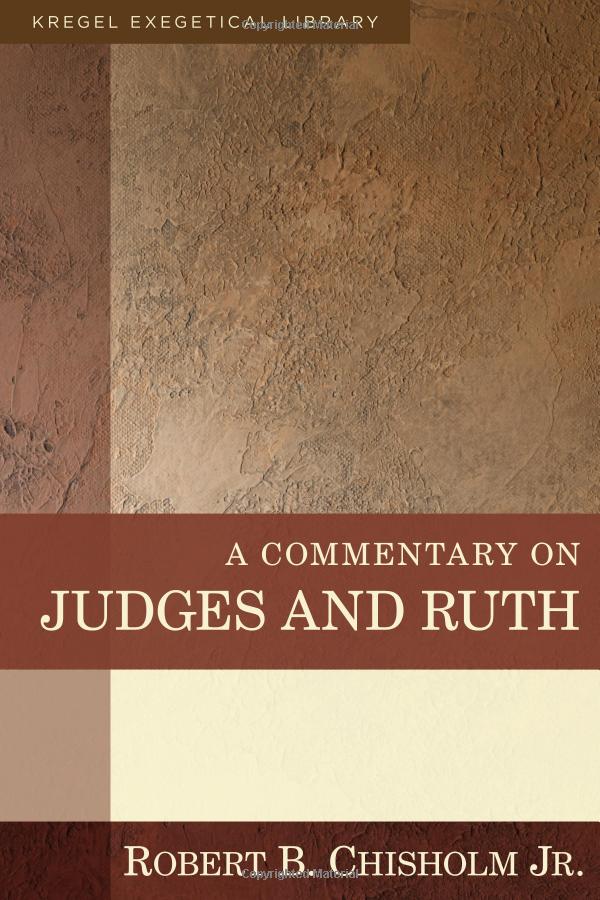
A Review of Robert Chisholm's Commentary on Judges & Ruth

By Paul Henebury on Thu, 06/19/14

Amazon affiliate link

Book Review - Interpreting the Pauline Letters

By Bob Hayton on Thu, 08/01/13

Amazon Affiliate Link

The life of a pastor is busy. Hectic may be a better word. And in the 21st Century, the pace of life has quickened for everyone, while the expectations for what a pastor must do have only increased. Fortunately, there are an abundance of books and resources designed to give the pastor or teacher a helping hand. Interpreting the Pauline Letters by John D. Harvey, will prove not only helpful but indispensable in the study of the Pauline Epistles.

Book Review - Revelation: The Spirit Speaks to the Seven Churches

By CPHurst on Wed, 04/18/12

Amazon Affiliate Link

Book Review - Zondervan Exegetical Commentary on the New Testament: Galatians

By CPHurst on Thu, 01/27/11

[amazon 0310243726 thumbnail]

The Zondervan Exegetical Commentary on the New Testament is a newer series of solid, scholarly and evangelical commentaries. I am pleased to provide a brief overview of the series using Thomas Schreiner’s contribution on Galatians as an example.

The ZECNT is a commentary series whose unusual structure and features make it unique. Future commentary series will have to take this format into consideration as they try to develop a comparable model. Though these are exegetical commentaries on the Greek text, those who are either uneducated in Greek or who are loosely familiar with it will still find much of benefit. The final form of the ZECNT series “was refined over time by an editorial board who listened to pastors and teachers express what they wanted to see in a commentary series based on the Greek text (p. 9).” I believe the editors of the ZECNT have lived up to that desire.

The ZECNT series follows a seven-fold outline form for each chapter. Here, we will explain each part of the outline and provide a sample of what it looks like from the chapter on Galatians 3:26-29.

1. Literary Context

Each chapter starts out by setting the Literary Context. The context of each pericope is explained in one or more paragraphs. Following the explanation the author places the pericope within the larger context of the whole book in outline form. Example: Following Paul’s argument in Galatians 3:1-25 concerning the nature of the law in relation to the promises of God, Paul now moves to show “that the law as a pedagogue is now passed since all believers are now God’s sons and daughters in Christ through faith (p. 253).” All believers, Gentiles included, are the promised sons of Abraham by virtue of being in Christ who is Himself the one true offspring of Abraham (3:16).

2. Main Idea

Second, following the literary context is the Main Idea. This section seeks to summarize the central message of each pericope in a few sentences. Example: Schreiner states that the main idea of Galatians 3:26-29 “is that believers are the offspring of Abraham by virtue of their union with Christ Jesus (p. 254).”

Pagination

  • First page
  • Previous page
  • Page 1
  • Page 2
  • Page 3
  • Current page 4
Image
Image of file drawer

Footer

  • About
  • Contact
  • Search
  • Forum

Since 2005

Image
2005 SI Logo Image