SHARPER IRON
“As iron sharpens iron, so one person sharpens another.” (Proverbs 27:17)
  • About
    • About Sharper Iron
    • Doctrinal Statement
    • Contact
    • Search
  • Forum
    • Forum Home
    • Comment Guidelines
    • Search
  • Account
    • Log in
    • Register

Death

“Now we know that the heart of an otherwise healthy young man can just stop.”

By Filings on Wed, 05/26/21
Body

“The day we received the report was one of the hardest we’ve had since he died. Yet there was also some comfort in it. It was comforting in the sense that he did nothing wrong and we did nothing wrong. It was comforting in the sense that the people who tried to save him did all they could… And it was comforting in the sense that it was so clearly an act of providence in which the Lord just took him.

To the Mourner

By Filings on Mon, 04/05/21
Body

“In recent months I have often mentioned the growing importance of poetry in my life. As we come to Good Friday and Easter, I have been enjoying some of the devotional poetry of days gone by, and was especially struck by Hannah Flagg Gould’s “To the Mourner.’” - Challies

For the Christian Who Is Afraid to Die

By Filings on Mon, 01/18/21
Body

“James Meikle beautifully tells us in these words. ‘Why so much complaint of death? It is true, death is the fruit of sin, for by sin, death came into the world. But it is also true, that death is the finisher of sin to the godly—for by death sin shall be cast out forever.’” - Challies

John Piper: Should Christians Cremate Their Loved Ones?

By Filings on Tue, 12/08/20
Body

“There has been a skyrocketing preference for cremation over the past decades in the United States …. There are various causes, but the greatest, by far, is the combination of secularization and economics. Fewer people test the practice with biblical criteria, and more people want the cheapest solution.

If God Did It, It Must Be Good. Right?

By Filings on Tue, 11/17/20
Body

“If Nick’s death was not a lapse in God’s sovereignty, it was also not a lapse in his goodness. If there was no moment in which God stopped being sovereign there is no moment in which he stopped being good—good toward us, good toward Nick, good according to his perfect wisdom. God can’t not be good.” - Challies

Have Yourself a Hallowed Halloween

By Filings on Mon, 10/26/20
Body

“While Halloween has largely been overtaken by inflatable witches and gory masks, the holiday’s roots in Christian belief and practice offer easy opportunities to engage my children in conversations about death and grief and Christian hope.” - TGC

Near-Death Experiences (NDEs) and the Christian

By Filings on Mon, 10/26/20
Body

“The closest thing we uncover to a near-death experience in Scripture is Stephen’s martyrdom in the book of Acts. … we find Stephen’s eyes being open to events in heaven just before he was killed.” - AiG

“Donne has often been described as a poet of death.... but he didn't stop there”

By Filings on Wed, 04/01/20
Body

“The famous sentences ‘No man is an island’ and ‘the bell tolls [for] thee’ are excerpted from the same meditation: ‘No man is an island, entire of itself; every man is a piece of the continent, a part of the main.

From the Archives – “Only God Is Great”

By Pastor Dan Miller on Wed, 02/26/20

The Protestant Reformation of the sixteenth century triggered a fresh wave of bloody conflict in Medieval Europe—a tract of real estate across which evolving nations had suffered tumultuous relations for many dark centuries. Protestant regions broke up Rome’s monopoly on authority in Europe. Neutralizing an authority is one thing; replacing it is quite another matter, and Europe tumbled into near-anarchy. Nation warred against nation and region against region in an all-out scramble to gain control of the rudder of Europe’s destiny.

Out of the context of these chaotic and violent times sprouted a philosophy of governance known as “Monarchial Absolutism.” Absolutist political theory held that Europe’s only hope for avoiding anarchy was for monarchs of the emerging European nations to wield unrestrained power. The cohesive influence Rome had once supplied Europe could be recovered, so it was proposed, by monarchs willing to impose their will with absolute sovereignty over their subjects. (One may detect a less than ideal environment for the human rights of dissenters under such a system. The half of that tragic subplot has never been told.)

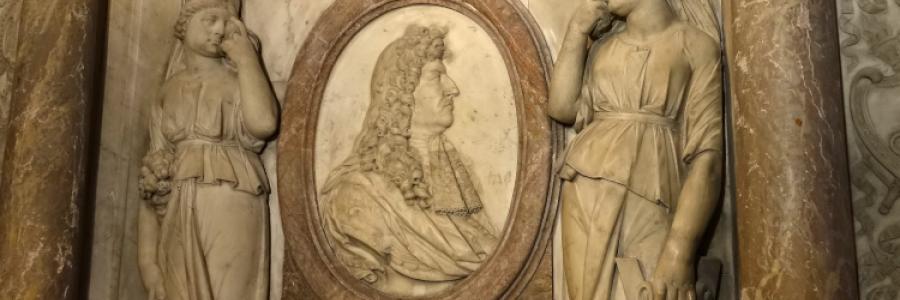
Historians generally recognize Louis XIV of France (1638-1715) as the quintessential absolutist monarch. Crowned at age five (a monarchial absolutist pre-schooler—you fill in the blanks!), Louis reigned in earnest from 1660 until his death. That translates into fifty-five years of absolute sovereignty over every aspect of French life. Every citizen, of what was at that time the most powerful nation on the continent, was expected to conform to Louis’ every belief, obey his every demand, and honor his every decision. Imagine!

“What would be the cost of living so long and why would anyone wish to pay it?”

By Filings on Tue, 02/25/20
Body

“On a few occasions I’ve read interviews with centenarians—those who have lived more than 100 years…. the great trial for such people is that they don’t just live, they out-live.” - Challies

Pagination

  • First page
  • Previous page
  • Page 1
  • Page 2
  • Page 3
  • Current page 4
  • Page 5
  • Page 6
  • Page 7
  • …
  • Next page
  • Last page
Image
Image of file drawer

Footer

  • About
  • Contact
  • Search
  • Forum

Since 2005

Image
2005 SI Logo Image