SHARPER IRON
“As iron sharpens iron, so one person sharpens another.” (Proverbs 27:17)
  • About
    • About Sharper Iron
    • Doctrinal Statement
    • Contact
    • Search
  • Forum
    • Forum Home
    • Comment Guidelines
    • Search
  • Account
    • Log in
    • Register

Faith and Reason

Is Science Incompatible with Christianity?

By Filings on Tue, 10/15/24
Body

“This trope, known as the ‘conflict thesis,’ was popularized by John William Draper’s 1874 book A History of the Conflict Between Religion and Science. He tells a familiar story: humanity, on its upward trajectory of progress, is continually opposed by a blind-faith peddling, power-hungry church.” - TGC

Anselm, the Ontological Argument, Faith and Reason

By Filings on Mon, 04/29/24
Body

“Anselm believed that the fact that humans are the kind of creatures that even raise the question of deity suggests there is something about us and the world that makes the idea of God reasonable in the first place.” - Breakpoint

Why Doesn’t God Make His Existence More Evident?

By Filings on Fri, 04/26/24
Body

“Why didn’t God write ‘Jesus Saves’ with the stars?…. As counterintuitive as it may seem, there is no reason to believe that if God were to make His existence more manifest that more people would repent of their sin and enter into a saving relationship with Him.” - Sean McDowell

“Recent scientific discoveries are forcing scientists to revisit questions of faith and to question their own questioning of it.”

By Filings on Wed, 04/03/24
Body

“It is said that an argument is what convinces reasonable men and a proof is what it takes to convince even an unreasonable man. With the proof now in place, cosmologists can no longer hide behind the possibility of a past-eternal universe…. There is no escape, they have to face the problem of a cosmic beginning” - Imaginative Conservative

“Can God be proven? Yes.”

By Filings on Tue, 08/29/23
Body

“Faith and reason have been divorced, and we Christians sometimes swallow that pill without realizing it. But it doesn’t have to be that way.” - Credo

400 years ago, philosopher Blaise Pascal was one of the first to grapple with the role of faith in an age of science and reason

By Filings on Wed, 07/05/23
Body

“Whatever one’s religious beliefs, Pascal teaches that all individuals have to make a choice between faith in some reality beyond themselves or a life without belief. But a life without belief is also a choice, and in Pascal’s view, a bad bet.” - The Conversation

Exploring the Mystical Connection between Math, Mind, and Nature

By Filings on Fri, 09/23/22
Body

“Philosopher Kenneth Samples has identified a set of truths that cannot be verified algorithmically or scientifically: logical truths, metaphysical truths, and objective moral truths. Some truths must simply be accepted to be able to do science at all.” - Reasons to Believe

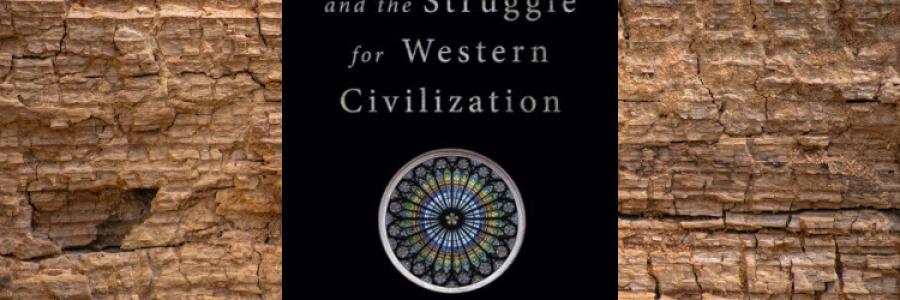
From the Archives – Reason, Faith and the Struggle for Western Civilization: A Review

By Aaron Blumer on Mon, 07/25/22

Some time ago, I came across Samuel Gregg’s book while perusing items at Acton.org, and the title caught my eye. In my personal efforts to take every thought captive to the obedience of Christ (2 Cor. 10:5), I’ve frequently felt that I don’t yet have an adequate understanding of the relationship between faith and reason, and by extension, the relationship between the sciences and Scripture.

The book didn’t take me where I hoped to go on that topic. It did, however, provide an interesting and enjoyable survey of the history of Western thought, and one of the better interpretations of the role of reason and Christianity in Western thought.

Does Christianity Require a “Leap of Faith?”

By Filings on Wed, 06/29/22
Body

“Becoming and remaining a Christian requires a ‘step of faith’ rather than a leap of faith. And that step of faith is not unique to Christianity. Throughout life we do many things that require a step of faith.” - Roger Olson

Miracles Don’t Violate the Laws of Nature

By Filings on Thu, 02/03/22
Body

“Although some earlier writers had viewed miracles as beyond laws of nature, Hume treated them as ‘violations’ of laws of nature. Once he adopted this definition, he insisted that miracles are miracles only if they violate natural law. Then he argued that natural law cannot be violated, so therefore miracles do not happen.” - C.Today

Pagination

  • First page
  • Previous page
  • Page 1
  • Current page 2
  • Page 3
  • Next page
  • Last page
Image
Image of file drawer

Footer

  • About
  • Contact
  • Search
  • Forum

Since 2005

Image
2005 SI Logo Image